From Independence to Complete Assistance: Key Distinctions Between Assisted Living and Nursing Homes
Business Name: BeeHive Homes of Mesquite
Address: 780 2nd S St, Mesquite, NV 89027
Phone: (702) 381-6899
BeeHive Homes of Mesquite
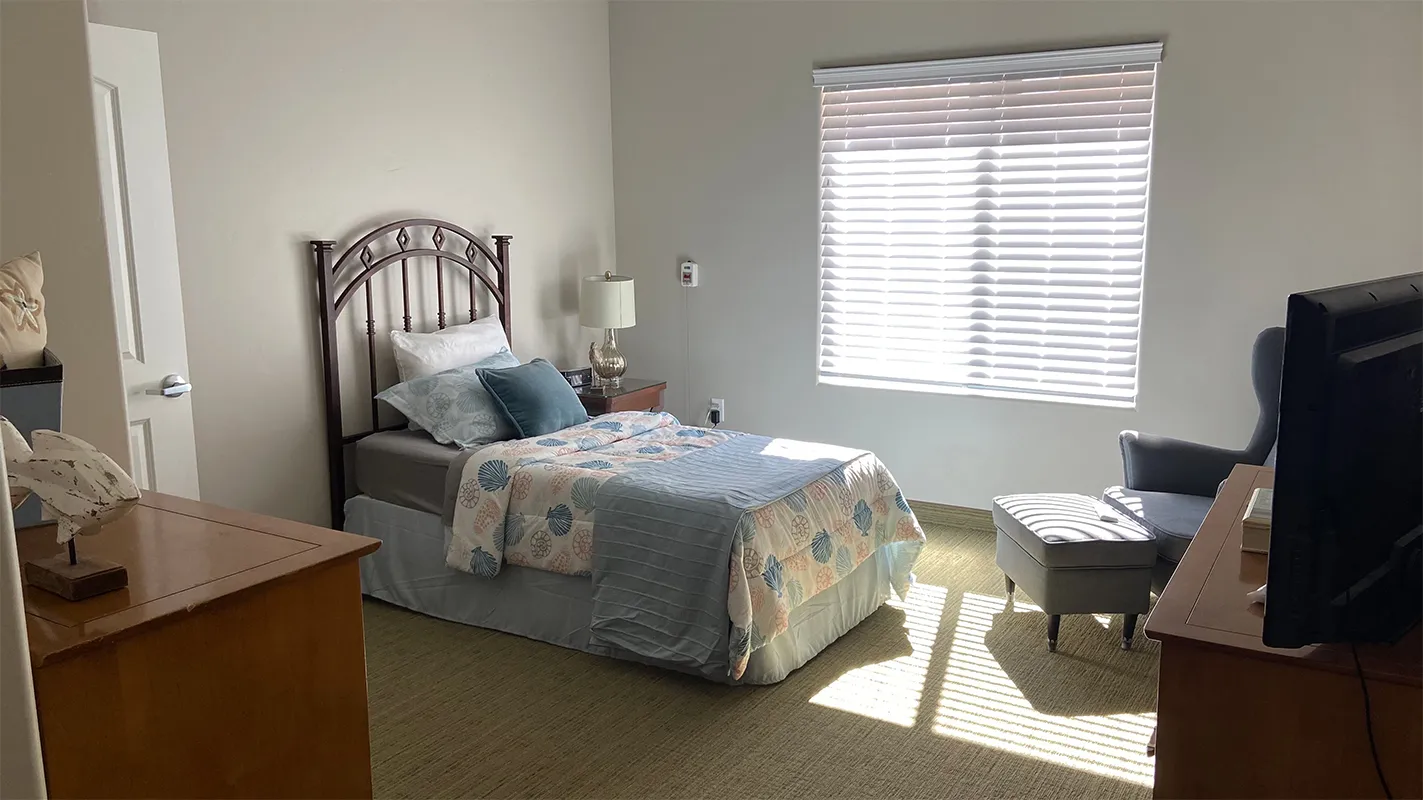
At BeeHive Homes of Mesquite, Nevada, we offer the finest assisted living experience available in a cozy, comfortable homelike setting. Each of our residents has their own spacious room with an ADA approved bathroom and shower. We prepare and serve delicious home-cooked meals three times a day every day. We maintain a small, friendly elderly care community. We provide regular activities that our residents find fun and contribute to their health and well-being. Our staff is attentive and caring and provides assistance with daily activities to our senior living residents in a loving and respectful manner. We would like to invite you to tour and experience our assisted living home and feel the difference.
780 2nd S St, Mesquite, NV 89027
Business Hours
Choosing in between assisted living and a nursing home is seldom a simply medical choice. It is normally a family story: a spouse attempting to keep a guarantee, an adult kid sensation pulled between work and caregiving, an older adult trying to hang on to self-respect while accepting that some help is now necessary.
I have sat at kitchen area tables with families who waited too long, and with others who moved too quick out of fear. The hardest situations often came from a simple misunderstanding. Individuals used "assisted living" and "nursing home" as if they were interchangeable, then found late while doing so that they had selected the incorrect level of care.
Understanding the real differences between these 2 kinds of senior care is the foundation for a safer, more respectful plan. It forms everything: cost, lifestyle, medical safety, and the emotional tone of the years ahead.
Two Extremely Different Viewpoints of Care
On paper, assisted living and nursing homes may look comparable. Both supply real estate, meals, and help with daily tasks for older grownups. In practice, they exist on different points of a spectrum, from self-reliance to full medical support.
Assisted living is built around the concept of assisting an older adult stay as independent and engaged as possible, with support woven in around every day life. The setting feels more like an apartment or a residential hotel. Residents lock their own doors, furnish their own areas, and come and go to meals and activities by option. Personnel aid with personal care, medications, and safety checks, but the underlying assumption is that the person can participate in their own life decisions.
Nursing homes, also called knowledgeable nursing centers, are structured initially around medical and nursing requirements. Locals tend to have more complicated health problems: unsteady heart problem, advanced dementia, frequent falls, feeding tubes, or the need for everyday nursing treatments. The environment feels more scientific. There are nurses on-site 24 hours a day, doctors supervising care, and strict regimens tied to medical tasks.
If you hold one clear idea in mind, let it be this: assisted living is social and support focused, nursing homes are medical and guidance focused. Many older adults will move through this spectrum as their health changes.
A Quick Photo: Key Differences
To anchor the concepts, it can assist to see the high level contrasts in one place.
- Assisted living is created for people who are mostly steady clinically however require aid with daily jobs like bathing, dressing, or handling medications.
- Nursing homes are developed for individuals who require ongoing nursing care, close monitoring, or rehabilitation after a health center stay.
- Assisted living highlights privacy, social life, and choice, frequently in apartment-style systems with shared dining and activities.
- Nursing homes highlight medical oversight and safety, frequently with shared or semi-private rooms and more structured schedules.
- Assisted living is usually private pay and less managed in information than nursing homes, which are greatly managed and often funded by Medicare or Medicaid, depending on the nation and specific situation.
The rest of this post goes into what these distinctions mean as soon as somebody actually lives there.
Daily Life: How It Really Feels to Live There
When households tour neighborhoods, they often concentrate on the design or the menu. Those matter, but what really forms a resident's experience is the rhythm of a normal Tuesday.
In most assisted living neighborhoods, early mornings begin on the resident's schedule. Staff deal aid with getting out of bed, bathing, and dressing, however within a time window that appreciates individual preference. A resident may pick breakfast in the dining room with good friends, or have a tray gave the apartment or condo periodically. There are generally a number of activities each day, from exercise classes to discussion groups or getaways to local shops. Locals come and go, socialize, or retreat to their rooms as they wish.
The general feel is similar to a small community with built-in supports. Some citizens require just light aid, such as pointers to take medication. Others may need more hands-on assistance, such as two-person transfers from bed to chair, however the culture still pushes toward autonomy where possible.
In a nursing home, every day life follows a more regimented pattern. Medications need to be passed at particular times, treatments done on schedule, and meals coordinated with medical needs. Staff work within stringent staffing ratios and documents requirements. For residents with substantial medical or cognitive difficulties, that structure can be reassuring and required for safety. For those who are still relatively independent but clinically delicate, it can feel restrictive.
I as soon as cared for a previous instructor who moved from assisted living to a nursing home after a stroke. In assisted living, she arranged an informal book club and insisted on strolling herself to meals. After the stroke, she needed a wheelchair and assist with transfers and toileting. In the nursing home, she missed out on the spontaneous hallway talks however needed the fast response when her blood pressure dropped or when she had breathing concerns in the evening. Her comment summed it up: "I gave up a little bit of liberty to stay alive longer and not terrify my kids every week."
Neither setting is inherently better. They support different requirements and temperaments.
Levels of Help: What Assist Is Really Provided
Senior care marketing language can blur essential lines. "We offer help with activities of daily living" appears on nearly every brochure. The real concerns are: just how much, how often, and by whom?
Assisted living typically concentrates on:
- Help with activities of daily living (ADLs), such as bathing, dressing, grooming, toileting, and transferring.
- Medication reminders or administration, frequently handled by experienced assistants with nurse oversight.
- Light housekeeping, laundry, and meals.
- Safety checks and reaction to call bells.
In lots of areas, assisted living personnel can not lawfully supply intricate medical treatments. They might not manage feeding tubes, injury vacs, IV medications, or comprehensive behavioral management for severe dementia, specifically if it includes hostility or wandering that compromises safety.
Nursing homes, on the other hand, supply a full range of nursing services. This can include injury take care of pressure injuries, IV prescription antibiotics, post-surgical care, tracheostomy care, and detailed management of numerous persistent conditions. They can likewise adapt more readily when someone's condition gets worse suddenly, such as after a heart failure flare or persistent infections.
Families in some cases attempt to extend assisted living beyond what it can safely handle by adding private responsibility caretakers. This can work for a time, particularly if the person values the homier environment. But as the need for two-person assistance, frequent medical checks, or complex dementia care grows, the stress between self-reliance and security ends up being difficult to ignore.
Medical Oversight and Safety Nets
Medical oversight is where the space between assisted living and nursing homes ends up being stark.
In most assisted living neighborhoods:
- There might be a nurse on-site only part of the day, or in some cases just on call.
- Physicians typically visit on a set up basis, or homeowners continue to see their own doctors off-site.
- If a medical emergency situation emerges, personnel call 911 and send out the resident to the emergency situation department.
- Monitoring is intermittent. Vital signs might be examined just when there is an issue or for a specific medical order.
Nursing homes run much closer to a medical unit:
- Licensed nurses are typically on-site 24 hr a day.
- Physicians and nurse specialists round regularly and react to modifications in condition.
- Many acute problems, such as urinary tract infections, small pneumonias, or moderate cardiac arrest flares, can be dealt with on-site without a journey to the hospital.
- Residents often have routine vital indications and weight checks, in addition to comprehensive monitoring of fluid consumption, skin stability, and behavior.
For someone with vulnerable health who lands in the healthcare facility three or 4 times a year, the added medical support of a nursing home can decrease that cycle of crisis. For someone whose conditions are stable, assisted living generally supplies enough oversight with much more autonomy.
Cognitive Modifications and Dementia: Where Each Setting Fits
Cognitive decline complicates whatever. Amnesia can be mild and primarily bothersome, or it can advance to the point where a person no longer recognizes risk, wanders outside at night, or becomes aggressive when frightened.
Many assisted living neighborhoods provide "memory care" systems. These are normally safe and secure, with locked doors and specialized personnel training. They are created for homeowners with moderate dementia who need structured regimens, environmental cues, and close supervision, but who do not require consistent hands-on nursing care.
However, memory care in assisted living still has limitations. If someone starts to fall repeatedly, refuses medications, has unmanageable behavioral symptoms regardless of psychiatric support, or establishes late-stage dementia with feeding troubles and frequent infections, a nursing home is normally better equipped. Competent nursing centers can offer more extensive guidance, complex medication adjustments, and coordination with psychiatric and palliative care teams.
Families often fight with regret over moving a loved one with dementia from assisted living or memory care into a nursing home. In my experience, the question to ask is not "Can we keep them here with sufficient support?" however "Is this environment still keeping them safe and comfy, or are we flexing it beyond its design?"
Costs, Insurance coverage, and Financial Trade-offs
Costs differ widely by area, however the monetary patterns are reasonably consistent.
Assisted living is generally personal pay. Regular monthly costs cover rent, meals, and a basic level of service, with additional charges for greater care tiers. A resident may begin at a lower expense and, as they require more help with bathing, movement, or incontinence care, move into greater pricing levels. Relative are frequently amazed when the regular monthly expense grows substantially over several years.
Long-term care insurance may pay for some or all of assisted living, depending on the policy. Numerous policies have an "elimination duration," which operates like a waiting duration before advantages start. Veterans' benefits and certain regional programs can assist, however they rarely cover the full amount.
Nursing homes, on the other hand, are more likely to user interface with public insurance. In many countries, short-term rehab remains in a nursing home after a hospital admission are covered by nationwide health programs or insurance coverage. Long-lasting custodial care in a nursing home may be paid through a mix of personal funds, long-lasting care insurance coverage, or federal government programs for those who qualify financially.
The financial trade-off is real. Assisted living often feels better and more personal, but may need ongoing private payment. Nursing homes can eventually be more budget-friendly for long-lasting, high-needs elderly care if the resident gets approved for public support, but the environment is more institutional.
The useful technique is to run monetary circumstances early. If a household is investing down cost savings rapidly in assisted living to keep somebody in a more independent setting, it is wise to draw up what takes place if a nursing home level of care becomes necessary. assisted living mesquite nv Planning ahead avoids rushed choices in the middle of a crisis.
The Function of Respite Care in the Decision
Respite care can be an effective, underused tool when households doubt about the best level of care. Both assisted living neighborhoods and nursing homes often offer short-term stays, anywhere from a couple of days to a number of weeks.
In assisted living, respite care is usually tailored towards giving household caretakers a break or test-driving the community. An older grownup might stay for ten days while their kid travels for work. During that stay, personnel can observe just how much support is actually needed. Families are frequently surprised. A parent who "only requires a little aid" in your home in some cases ends up to need more hands-on support once they are observed across full days and nights.
In nursing homes, respite stays can serve similar purposes however with greater medical oversight. If a caretaker is tired from supplying 24-hour care to a spouse with innovative dementia, a week or more of respite in a competent setting can support medications, enhance nutrition, and provide the caregiver room to think clearly about long-term plans.
Used thoughtfully, respite care ends up being a low-risk way to collect information. It allows everyone to experience the setting before dedicating to a long-term relocation and can highlight whether assisted living suffices or a nursing home is genuinely needed.
Emotional Realities: Independence, Identity, and Household Dynamics
Care decisions are hardly ever almost security. They are likewise about identity.
An older adult moving into assisted living may be grieving the loss of a home, a garden, or driving. Assisted living, when done well, acknowledges that loss while protecting as numerous regimens and options as possible. Residents can embellish their homes with familiar furniture, preserve pastimes, and make brand-new good friends. Staff can fold small preferences into day-to-day care, such as how a person likes their coffee or the order in which they dress.
A move to a nursing home frequently follows a medical occasion or a noticeable decrease. The shift can feel abrupt. I have seen citizens move from complete independence to a nursing home in the span of three weeks after a fall and stroke. In those cases, the emotional work for both the household and the resident includes accepting a new level of vulnerability. It assists when staff take time to comprehend who the individual was before they needed this level of assistance, not just who they are on paper now.
Family dynamics can make complex everything. Siblings might disagree about dangers or costs. A spouse might demand "never ever putting them in a home" and then confront burnout and animosity. Naming these emotional undercurrents honestly, typically with the help of a social worker, leads to much better decisions.
Practical Signals That Assisted Living May Be Enough
Families often request for a simple rule of thumb. There is no perfect formula, however certain patterns recommend that assisted living is most likely proper, a minimum of for now.
Assisted living tends to work well when:
- Medical conditions are reasonably stable, with routine office visits instead of regular emergency situation trips.
- The person can participate in their own care decisions, even if they require suggestions or aid with execution.
- They can eat and drink regularly without intensive triggering or unique interventions.
- Behavioral symptoms from dementia, if present, are manageable with redirection and do not include severe hostility or self-harm.
- Falls, if occurring, are infrequent and not causing severe injuries, and staff can fairly decrease danger with supports like grab bars and mobility aids.
In these situations, the social structure, activities, and privacy of assisted living can in fact improve health by lowering isolation and supporting well balanced routines.
Clear Indications That a Nursing Home Might Be Safer
Conversely, there are patterns that signal a need for the greater level of senior care supplied by a nursing home. The most worrying combination is frequent medical crises plus a diminishing capability to comprehend or follow safety instructions.
Nursing home positioning ends up being better suited when:
- There are repeated hospitalizations or emergency situation visits for conditions like heart failure, pneumonia, serious infections, or uncontrolled diabetes.
- The person requires two-person transfers regularly, utilizes a mechanical lift, or has actually ended up being mainly bedbound.
- They requirement competent treatments on a daily or near-daily basis, such as intricate injury care, IV medications, or regular suctioning for breathing issues.
- Advanced dementia leads to wandering into hazardous locations, aggressiveness that puts others at danger, or an inability to consume or drink without constant triggering or special assistance.
- Family caregivers or assisted living personnel are expressing unsustainable stress or fear about safety despite reasonable interventions.
When these patterns exist, trying to "make assisted living work" typically causes near-constant crises and burnout. A nursing home's much heavier staffing model and medical infrastructure can provide a more secure and more steady environment.
Questions to Ask When Exploring Communities
When you visit prospective communities, it is easy to get captured up in appearances. A freshly refurbished lobby does not ensure great care, and an older building can house an exceptional group. Focus your limited time on concerns that expose how the place really functions.
Here are practical concerns that frequently expose more than any pamphlet:
- How do you choose when somebody's requirements are too high for this setting, and can you share recent examples?
- What is your personnel turnover like, particularly amongst aides and nurses, and how do you support training for dementia and complicated care?
- How do you deal with medical modifications at night or on weekends, and who is licensed to make choices in those situations?
- For respite care, what info do you collect before admission, and how do you share what you discover with families later?
- Can I talk with an existing resident or family member, picked by you, about their experience with interaction and responsiveness?
Listen for specifics instead of vague peace of minds. The best facilities, whether assisted living or nursing homes, are frank about their limits and clear about how they intensify concerns.
Planning for Transitions Instead of One Final Move
One of the quieter truths in elderly care is that lots of people will not invest the rest of their lives in a single setting. A fairly common trajectory may look like this: living at home with increasing assistance, then assisted living, then perhaps memory care within assisted living, and ultimately a nursing home for those last months or years when medical needs are constant.
Families often feel they have actually failed when a move from assisted living to a nursing home becomes necessary. In practice, this transition often means that the earlier options protected self-reliance longer and made good use of each level of care.
Good planning accepts that needs modification. That implies:
- Choosing assisted living communities that have clear criteria and honest communication about when they can no longer securely satisfy needs.
- Understanding which nursing homes close by have strong credibilities, even if you hope you never ever need them.
- Using respite care strategically to evaluate settings and break cycles of caregiver exhaustion.
- Documenting preferences ahead of time regulations and care plans so that when a crisis comes, decisions show the person's worths, not just the family's fear.
Thoughtful usage of the complete continuum of care is not a failure of independence. It is often what permits an older adult to invest more time living and less time in avoidable crises.
Selecting in between assisted living and nursing homes is not about picking the "better" alternative in some abstract sense. It is about matching real human requirements to the right environment at the correct time, acknowledging that both self-reliance and safety matter deeply. When families comprehend the distinctions, ask hard questions, and allow for future transitions, they give their loved ones a better opportunity at a final chapter marked by self-respect, convenience, and as much control as health will allow.
BeeHive Homes of Mesquite provides assisted living care
BeeHive Homes of Mesquite provides respite care services
BeeHive Homes of Mesquite supports assistance with bathing and grooming
BeeHive Homes of Mesquite offers private bedrooms with private bathrooms
BeeHive Homes of Mesquite provides medication monitoring and documentation
BeeHive Homes of Mesquite serves dietitian-approved meals
BeeHive Homes of Mesquite provides housekeeping services
BeeHive Homes of Mesquite provides laundry services
BeeHive Homes of Mesquite offers community dining and social engagement activities
BeeHive Homes of Mesquite features life enrichment activities
BeeHive Homes of Mesquite supports personal care assistance during meals and daily routines
BeeHive Homes of Mesquite promotes frequent physical and mental exercise opportunities
BeeHive Homes of Mesquite provides a home-like residential environment
BeeHive Homes of Mesquite creates customized care plans as residents’ needs change
BeeHive Homes of Mesquite assesses individual resident care needs
BeeHive Homes of Mesquite accepts private pay and long-term care insurance
BeeHive Homes of Mesquite assists qualified veterans with Aid and Attendance benefits
BeeHive Homes of Mesquite encourages meaningful resident-to-staff relationships
BeeHive Homes of Mesquite delivers compassionate, attentive senior care focused on dignity and comfort
BeeHive Homes of Mesquite has a phone number of (702) 381-6899
BeeHive Homes of Mesquite has an address of 780 2nd S St, Mesquite, NV 89027
BeeHive Homes of Mesquite has a website https://beehivehomes.com/locations/mesquite/
BeeHive Homes of Mesquite has Google Maps listing https://maps.app.goo.gl/FouNDQWSGjDorrdT7
BeeHive Homes of Mesquite has Instagram page https://www.instagram.com/beehivehomesmesquite/
BeeHive Homes of Mesquite has an TikTok page https://www.tiktok.com/@beehivehomesofmesquite
BeeHive Homes of Mesquite has an YouTube page https://www.youtube.com/@hamiltonshives4468
BeeHive Homes of Mesquite won Top Assisted Living Homes 2025
BeeHive Homes of Mesquite earned Best Customer Service Award 2024
BeeHive Homes of Mesquite placed 1st for Senior Living Communities 2025
People Also Ask about BeeHive Homes of Mesquite
What is BeeHive Homes of Mesquite Living monthly room rate?
Our base rate is $4,400/month plus a one-time community fee of $1,500. We do an assessment of each resident's needs upon move-in, so a resident's rate may be slightly higher. Based on the assessment, a resident may be in Tier I, II, or III with pricing from $4,900 to $5,300 per month. However, we do not add any "a la carte" charges after that rate is set. There are no add-ons or hidden fees
Does Medicare or Medicaid pay for a stay at Bee Hive Homes?
Medicare pays for hospital and nursing home stays, but does not pay for assisted living. Some assisted living facilities are Medicaid providers, but we are not. We do accept private pay, long-term care insurance, and we can assist qualified Veterans with approval for the Aid and Attendance program
Do we have a nurse on staff?
We do have a nurse on contract who is available as a resource to our staff but our residents' needs do not require a nurse on-site. We always have trained caregivers in the home and awake around the clock
What can you tell me about the food at Bee Hive?
You have to smell it and taste it to believe it! We use dietitian-approved meals with alternates for flexibility, and we can accommodate needs for different texture and therapeutic diets. We have found that most physicians are happy to relax diet restrictions without any negative effect on our residents
Do we have a pharmacy that fills medications?
We do have a relationship with an excellent pharmacy that is able to deliver to us and packages most medications in punch-cards, which improves storage and safety. We can work with any pharmacy you choose but do highly recommend our institutional pharmacy partner
Where is BeeHive Homes of Mesquite located?
BeeHive Homes of Mesquite is conveniently located at 780 2nd S St, Mesquite, NV 89027. You can easily find directions on Google Maps or call at (702) 381-6899 Monday thru Sunday: 8:00am to 7:00pm
How can I contact BeeHive Homes of Mesquite?
You can contact BeeHive Homes of Mesquite by phone at: (702) 381-6899, visit their website at https://beehivehomes.com/locations/mesquite/ or connect on social media via Instagram Facebook or TikTok
Jensen Trailside Park provides a convenient outdoor setting where families connected with Assisted living memory care senior care elderly care and respite care can enjoy fresh air recreation and meaningful time together.